Begin typing to search, when autocomplete results are available use up and down arrows to review and enter to select. Selecting an options will take you to a new page. Touch device users, explore by touch.SEARCH
Search within a riding style, select an optionBegin typing to search, when autocomplete results are available use up and down arrows to review and enter to select. Selecting an options will take you to a new page. Touch device users, explore by touch.
Free shipping on orders over $79 to Illinois
Orders over $79.00 will receive free shipping. This is a residential delivery service, deliveries Monday through Friday from 9:00am to 8:00pm.
What should I prioritize when choosing UTV tie-downs?
Pick durable polyester webbing with ratchet hardware, a strap width that matches your vehicle’s size, a length that reaches your anchors without excess slack, and a working load limit and break strength that comfortably cover the total load. Soft loops protect frames and painted parts during cinching.
How should I secure a UTV on a trailer with these straps?
Use a secure four-corner setup with the front pulling forward and the rear pulling back, crisscrossing when possible for stability. Attach to solid frame points (not suspension or axles), center weight over the trailer axle, and recheck tension shortly after setting off.
Which end fittings should I pick for my trailer?
Match your straps to your anchor system—hooks or fittings that work with D-rings, E-Track, or L-Track—and confirm compatibility before buying. Soft loops help when direct hook points are limited or you want extra frame protection.
Can I use these tie-downs for motorcycles or ATVs?
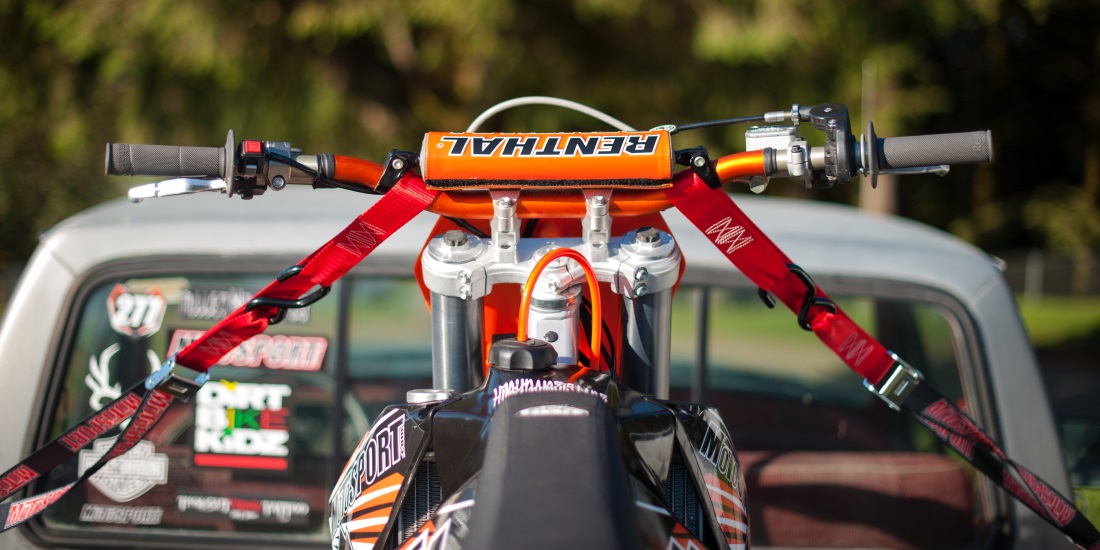
They’re designed primarily for side-by-sides; motorcycle transport is better served with motorcycle-specific, narrower straps and soft loops. If you’re planning for a future UTV, choose heavier-duty, wider options suited to that platform.
How do weather and storage affect tie-down performance?
Polyester webbing resists moisture and temperature swings better than rope, and ratchets maintain consistent tension in wet or extreme conditions. Inspect webbing and hardware before and after trips, dry thoroughly before storage, and verify basic vehicle checks for stable transport.