Begin typing to search, when autocomplete results are available use up and down arrows to review and enter to select. Selecting an options will take you to a new page. Touch device users, explore by touch.SEARCH
Search within a riding style, select an optionBegin typing to search, when autocomplete results are available use up and down arrows to review and enter to select. Selecting an options will take you to a new page. Touch device users, explore by touch.
Free shipping on orders over $79 to Illinois
Orders over $79.00 will receive free shipping. This is a residential delivery service, deliveries Monday through Friday from 9:00am to 8:00pm.
Look along the rim of your tire. You should be able to find a group of numbers separated by slashes and/or dashes. There are two general types of tire sizing, metric and english.
Most street and dirt bikes use metric sizes. A metric size will look like 100/90-19. Most ATVs use english sizes, english size will look like 35x10-15.
How do I choose the right rear tire for a utility ATV/UTV?
Match the exact size in your manual, keep the same construction type as stock (bias or radial), pick a tread/compound for your terrain, and confirm load and speed ratings meet your hauling and riding needs.
Bias-ply or radial rear tire—which is better for utility use?
Bias-ply offers stiffer sidewalls and durability for heavy loads and towing, while radial runs cooler with more precise feedback; stick with your original type and don’t mix constructions.
What tread and compound work best for mud, chores, or mixed trails?
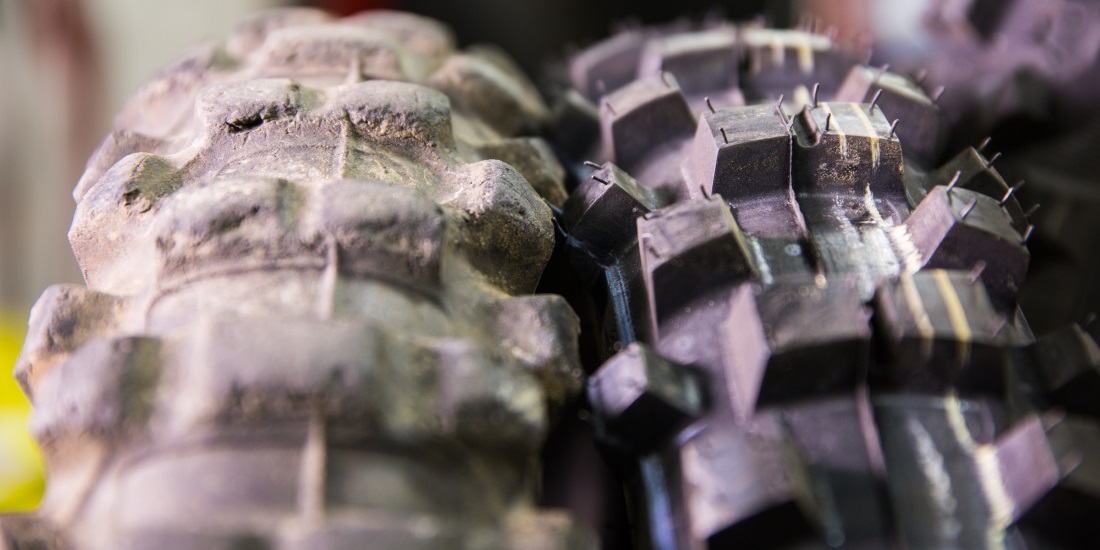
Deep, aggressive lugs bite in mud and loose soil; intermediate dual-sport patterns balance off-road traction with stable manners on hardpack; harder compounds last longer, softer compounds maximize grip, and dual-compound blends both.
Why do load and speed ratings matter on rear utility tires?
They ensure the tire can safely carry your vehicle, passengers, and cargo at sustained speeds—choose ratings that meet or exceed your typical use and maintain the recommended pressure.
Any install and maintenance tips for rear utility tires?
Follow the rotation arrow, verify rim compatibility and clearances (especially if going wider), and balance after mounting; inspect tread wear bars and sidewalls regularly, and replace in matched pairs for consistent handling.