Begin typing to search, when autocomplete results are available use up and down arrows to review and enter to select. Selecting an options will take you to a new page. Touch device users, explore by touch.SEARCH
Search within a riding style, select an optionBegin typing to search, when autocomplete results are available use up and down arrows to review and enter to select. Selecting an options will take you to a new page. Touch device users, explore by touch.
Free shipping on orders over $79 to Illinois
Orders over $79.00 will receive free shipping. This is a residential delivery service, deliveries Monday through Friday from 9:00am to 8:00pm.
What’s the difference between tubed and boxed A-arms, and how do I choose?
Tubed A-arms are lighter and offer a traditional feel, while boxed designs use reinforced plate construction for maximum strength and impact resistance. Choose tubed for faster, lighter trail or dune riding; pick boxed for rocky terrain, heavy abuse, or larger tires where durability matters.
High-clearance A-arms vs lift/trailing arm kits—when should I use each?
High-clearance A-arms boost obstacle clearance without changing ride height and preserve nimble handling. Lift and trailing arm setups suit deep ruts, bigger tires, or heavy loads and pair well with long-travel shocks and extended driveline components.
Are these A-arms and trailing arms meant for ATVs/UTVs or motorcycles?
They’re engineered for ATVs and UTVs; motorcycle suspension geometry is incompatible. Use motorcycle-specific forks, shocks, or swingarms for two-wheel applications.
What should I check to avoid interference with other mods like shocks, wheels, or axles?
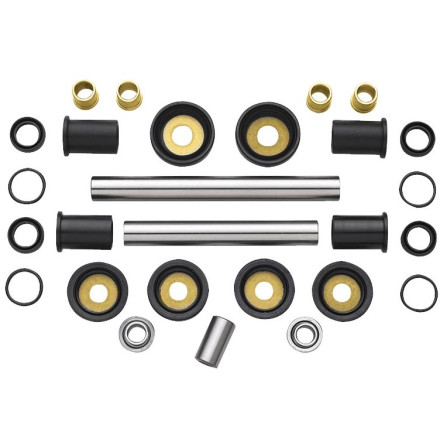
Match the kit to your model and existing parts, and look for features like adjustable pivot blocks and compatible sway bar links or radius rods. After install, cycle the suspension to confirm steering stops, brake line routing, axle/CV angles, and tire-to-arm clearance, then align.
How do I maintain heavy-duty A-arms and trailing arms for long service life?
Rinse off mud and sand, inspect welds, hardware, bushings, and ball joints, and grease any serviceable pivots. Recheck fasteners and alignment after initial rides and after hard impacts.