Begin typing to search, when autocomplete results are available use up and down arrows to review and enter to select. Selecting an options will take you to a new page. Touch device users, explore by touch.SEARCH
Search within a riding style, select an optionBegin typing to search, when autocomplete results are available use up and down arrows to review and enter to select. Selecting an options will take you to a new page. Touch device users, explore by touch.
Free shipping on orders over $79 to Illinois
Orders over $79.00 will receive free shipping. This is a residential delivery service, deliveries Monday through Friday from 9:00am to 8:00pm.
What should I prioritize when shopping for motorcycle chaps for street bikes and cruisers?
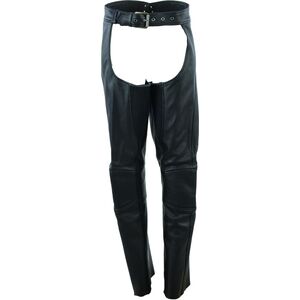
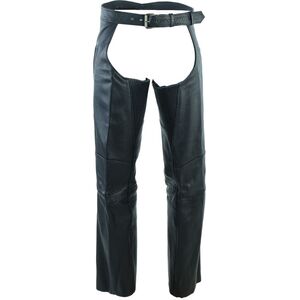
Prioritize abrasion-resistant leather, a leather thickness in the 6–8 oz range for crash resistance, secure closures like a double-zipper plus snaps, CE-rated knee/hip armor pockets, and a fit that goes over your riding pants and boots.
Which chap styles work best for highway touring, warm urban commutes, and wet rides?
Full-length leather provides the most coverage for highway touring and cooler rides, ventilated half-chaps are best for warm casual urban use, and textile or hybrid options with waterproofing suit rainy commutes.
How should chaps fit over riding pants and boots for safe, comfortable use?
They should fit snug over your riding layers without restricting movement, cover down to the boot line to prevent ride-up, and be checked for secure closures and no flapping during full motion.
Do leather thickness, closures, and armor pockets really matter for protection?
Yes — thicker top-grain leather in the recommended range, quality hardware like double zippers and snaps, and CE-rated knee/hip pocket compatibility are key markers of real protective performance; avoid flimsy stitching or single-zip designs.
Can I use aftermarket armor or make minor mods to chaps, and what should I inspect after installation?
Choose chaps with compatible armor pockets, verify alignment and clearance so pockets and fasteners don’t bind in riding positions, and routinely inspect stitching, hardware, and armor seating after any modification or fitting change.