Begin typing to search, when autocomplete results are available use up and down arrows to review and enter to select. Selecting an options will take you to a new page. Touch device users, explore by touch.SEARCH
Search within a riding style, select an optionBegin typing to search, when autocomplete results are available use up and down arrows to review and enter to select. Selecting an options will take you to a new page. Touch device users, explore by touch.
Free shipping on orders over $79 to Illinois
Orders over $79.00 will receive free shipping. This is a residential delivery service, deliveries Monday through Friday from 9:00am to 8:00pm.
What features matter most when choosing a motorcycle tire pressure gauge?
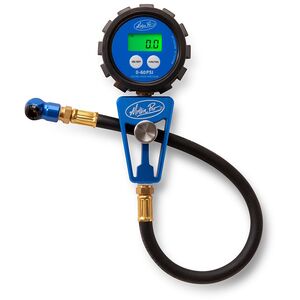
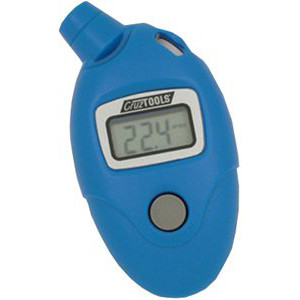
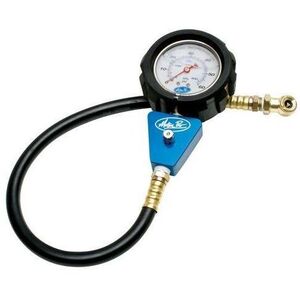
Choose a high-capacity gauge (around 250–260 psi) with a swivel/360° head, dual Schrader/Presta compatibility, a bleed valve, and a backlit digital display with psi/bar/kPa. Aim for accuracy within +/- 1–2 psi and a leak-proof fit to protect handling and tire life.
Which gauge features are best for street and sport riding?
Prioritize precise digital readouts with backlighting, multi-unit options, and beep alerts for quick, repeatable checks. A rotating head and bleed button help fine-tune pressures on tight valve angles and during night rides or track days.
What should cruiser or touring riders look for in a tire pressure gauge?
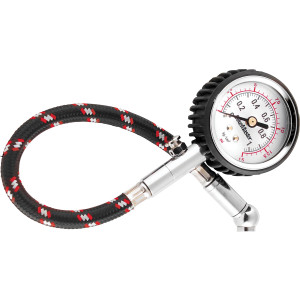
Pick a durable gauge with an angled or long-reach head for low-slung valves, plus a bleed valve for small adjustments under load. Integrated tread depth measurement is a bonus for monitoring highway wear without extra tools.
What works best for dirt, ADV, ATV, or UTV tires?
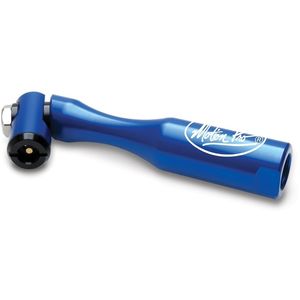
Go for a rugged, pocketable gauge with a high max pressure, bleed valve for rapid trail adjustments, and a 360° head to reach awkward stems on knobby tires. Ensure a secure, leak-free connection and avoid fragile removable adapters.
How do I get accurate, consistent readings across weather and rides?
Check tires cold, as pressure drops roughly 1 psi for every 10°F drop in temperature, and use the bleed button to fine-tune. Periodically cross-check your gauge against a known reference and inspect the head and seals to prevent slow leaks.