Begin typing to search, when autocomplete results are available use up and down arrows to review and enter to select. Selecting an options will take you to a new page. Touch device users, explore by touch.SEARCH
Search within a riding style, select an optionBegin typing to search, when autocomplete results are available use up and down arrows to review and enter to select. Selecting an options will take you to a new page. Touch device users, explore by touch.
Free shipping on orders over $79 to Illinois
Orders over $79.00 will receive free shipping. This is a residential delivery service, deliveries Monday through Friday from 9:00am to 8:00pm.
What PSI range is best for a cruiser tire pressure gauge?
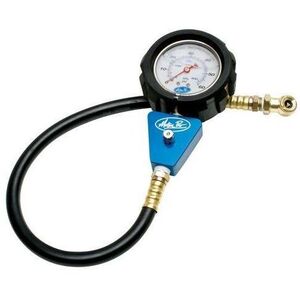
Choose a 0-60 PSI gauge for finer resolution in typical cruiser pressures, where small 2–3 PSI changes affect handling, braking, and tire wear.
Should I pick a digital or analog gauge for my cruiser?
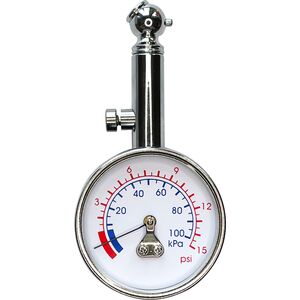
Digital offers 0.1 PSI precision and backlighting for low light; analog dials are rugged and battery-free. Avoid pencil-style gauges due to larger error.
Which connection style makes valve access easier on cruisers?
Go with swivel or angled heads and flexible hoses to clear fenders and brake hardware, and ensure Schrader valve compatibility common to cruisers.
What features help fine-tune pressure and get reliable readings?
Look for ±1 PSI accuracy, a bleed valve for quick adjustments, and auto-hold to read after removal; backlit displays help in rain or at night. Always check pressures cold for consistency.
How should I use and care for a gauge to keep it accurate in all weather?
Calibrate annually, store it dry, and protect toolbox gauges in a padded case; recheck after rides since heat raises tire pressure. Compact, rugged models are ideal for on-bike carry.